Nature & Wildlife
Bengal Florican in Nepal: Chitwan’s Rare Grassland Bird
Discover the critically endangered Bengal florican, its unique courtship display, the grasslands of Chitwan National Park, and the conservation efforts needed to protect this rare bird.
Himal Shahi Thakuri · Oct 27, 2026 · 8 min read
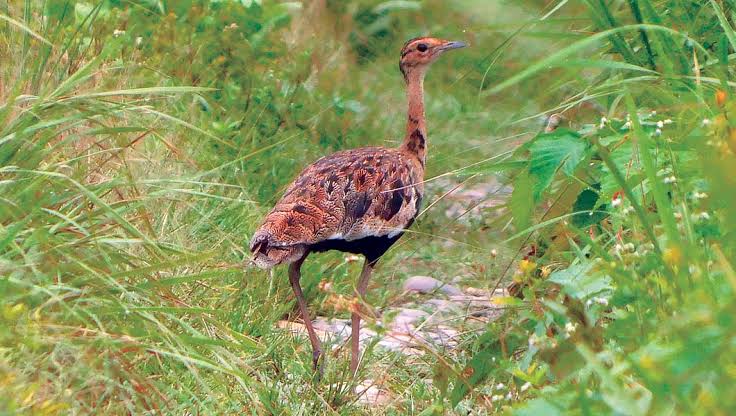
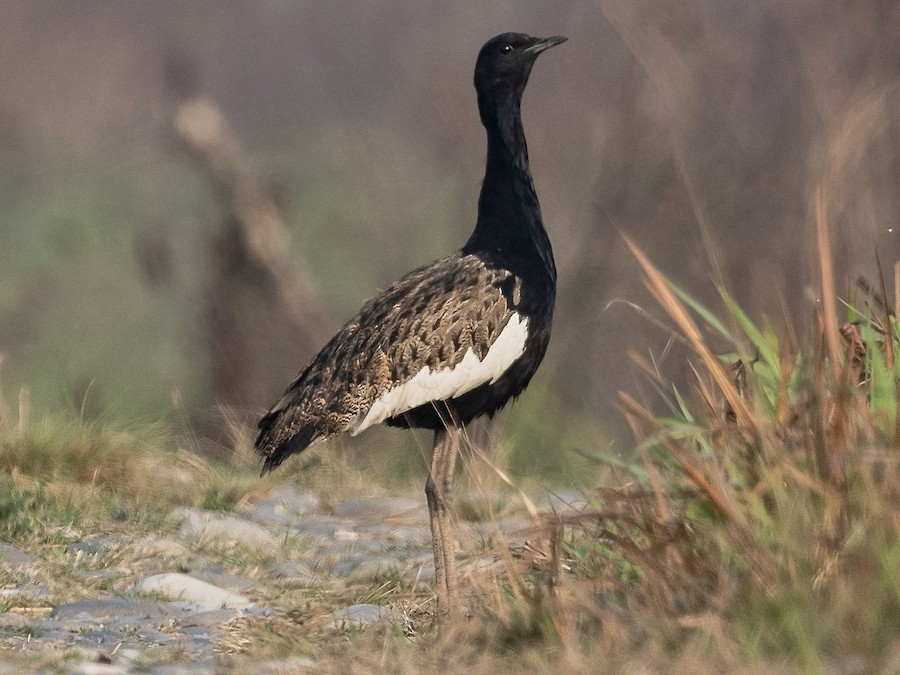
The Bengal florican is a critically endangered grassland bird whose survival depends on protecting its remaining natural habitat. · Google
Bengal Florican in Nepal: Chitwan’s Rare Grassland Bird
Chitwan National Park is famous for its greater one-horned rhinoceroses, Bengal tigers, Asian elephants, and rich birdlife. However, beyond the animals commonly associated with jungle safaris, the park also protects a much less familiar species: the Bengal florican (Houbaropsis bengalensis).
This rare grassland bird is classified as Critically Endangered on the IUCN Red List. Unlike animals that live mainly in dense forests, the Bengal florican depends on the open grasslands of the Terai, where suitable vegetation provides opportunities for feeding, nesting, and breeding.
Its survival is closely connected to the future of Nepal’s natural grasslands. Research published in the Nepalese Journal of Zoology documents a substantial decline in Bengal florican populations, including a reported 75% decline in Chitwan National Park between 1982 and 2023.
The story of this remarkable bird reveals an important part of Chitwan’s biodiversity and explains why protecting grasslands is just as important as conserving forests.
What Is the Bengal Florican?
The Bengal florican is a member of the bustard family, a group of mostly ground-dwelling birds known for their distinctive appearance and behaviour. It is one of the rarest bustard species in the world.
Its scientific name is Houbaropsis bengalensis. The species has a fragmented distribution, with populations in the lowlands of Nepal and India and another population in Cambodia.
The bird is particularly difficult to observe because it is naturally uncommon, spends much of its time among grassland vegetation, and can be difficult to distinguish from its surroundings.
Although it is associated with the Bengal region through its common name, the Bengal florican is an important part of Nepal’s own natural heritage. Its presence in the Terai highlights the ecological importance of the country's lowland landscapes.
How to Identify a Bengal Florican
One of the most distinctive features of the Bengal florican is the difference in appearance between adult males and females.
During the breeding season, the male develops striking black plumage across the head, neck, and underside. Its brown upperparts and conspicuous white wing patches create a dramatic contrast, particularly when the bird takes flight or performs its courtship display.
Females are generally larger and have predominantly buff-brown plumage, with darker markings that help them blend into the grassland vegetation.
Both sexes spend much of their time on the ground. Their colouring and behaviour make them less conspicuous than many birds that live in trees or gather in large, noisy flocks.
For birdwatchers, identifying the Bengal florican requires patience, a good field guide, and careful observation. Its rarity also means that photographs and sightings should always be checked against reliable identification resources.
Where Does the Bengal Florican Live in Nepal?
The Bengal florican inhabits lowland grasslands, particularly natural and seasonally flooded grassland systems in the Terai.
In Nepal, the species has been recorded in Chitwan National Park, Shuklaphanta National Park, and Koshi Tappu Wildlife Reserve and adjoining areas. Historical records and conservation studies also document its former presence in other protected landscapes.
Chitwan is important because its grasslands support a range of specialised wildlife. These habitats are shaped by seasonal flooding, plant growth, grazing, and management practices that influence the height and structure of the vegetation.
The Bengal florican needs a combination of suitable grassland conditions. Relatively short grass can provide feeding and display opportunities, while taller vegetation offers concealment and nesting cover.
This requirement for different vegetation structures makes grassland management particularly important.
It is also important to remember that the bird is extremely rare. Its presence in Chitwan does not guarantee a sighting during a safari, and visitors should not expect to encounter it at a particular location without reliable, current information.
The Remarkable Courtship Display
The Bengal florican is famous for the courtship behaviour of the male.
During the breeding season, a male may leap above the grass, briefly displaying its contrasting plumage. These movements form part of its courtship display and help attract potential mates.
Such behaviour is fascinating to researchers because it provides insight into the species’ breeding biology and its need for appropriate open areas within the grassland.
However, breeding birds can be particularly sensitive to disturbance. Approaching too closely, leaving authorised routes, or attempting to force a bird into flight can interfere with its natural behaviour.
Responsible wildlife observation means allowing birds to behave naturally without pressure from people or cameras.
Why Is the Bengal Florican Critically Endangered?
The Bengal florican faces several interconnected threats, many of which affect the grassland ecosystems on which it depends.
1. Loss of Natural Grasslands
Natural grasslands have been converted into farmland, settlements, and other land uses across parts of the species’ range. When suitable habitat disappears, birds lose the space needed for feeding, breeding, and raising their young.
2. Changes in Vegetation
Grasslands change naturally as vegetation grows and woody plants spread. If the habitat becomes unsuitable for feeding or breeding, Bengal floricans may lose access to essential resources.
Maintaining appropriate grassland structure requires careful, evidence-based management rather than treating every open area in the same way.
3. Poorly Timed Grassland Burning
Fire can influence grassland ecosystems, but poorly timed burning may destroy nests, disturb breeding birds, or reduce essential habitat cover.
Conservation managers must consider the breeding season and local ecological conditions when planning grassland management.
4. Disturbance and Fragmentation
Human activities, livestock, and changes in surrounding land use can disturb birds and divide remaining habitats into smaller patches.
When populations become isolated, their long-term survival becomes more difficult.
5. Threats Outside Protected Areas
Bengal floricans may use surrounding agricultural landscapes during parts of the year. In these areas, hunting, trapping, pesticides, and disturbance can create additional risks.
Effective conservation therefore requires cooperation between protected-area authorities and communities living around important grassland habitats.
The Decline of Bengal Florican in Chitwan
The Bengal florican’s conservation situation in Nepal is serious.
A scientific review published in the Nepalese Journal of Zoology reported that the species’ population in Chitwan National Park declined by approximately 75% between 1982 and 2023. The same review documented substantial declines in other important Nepalese habitats.
These figures demonstrate why long-term wildlife monitoring matters. A species can continue to exist within a national park while its population becomes increasingly vulnerable.
Population estimates can vary according to the survey year, survey method, and area covered. For that reason, older estimates should not be presented as current population counts.
The decline in Chitwan also shows that simply protecting a boundary on a map is not always enough. Wildlife conservation requires suitable habitat, effective management, regular monitoring, and cooperation among conservation professionals and local communities.
Why Chitwan’s Grasslands Matter
Chitwan National Park is not only a forest landscape. Its grasslands, wetlands, rivers, and riverine forests form a connected ecosystem that supports a remarkable range of species.
Grasslands provide feeding and breeding habitats for birds, grazing opportunities for herbivores, and important ecological functions throughout the Terai.
The Bengal florican is particularly dependent on these open habitats. Protecting its environment can also support other grassland wildlife and help maintain the wider ecological diversity of the park.
For visitors, this is a reminder that the value of a national park cannot be measured only by the animals that are easiest to photograph. Rare birds and less visible species are also essential parts of the natural world.
How Can We Help Protect the Bengal Florican?
Protecting the Bengal florican requires long-term conservation action.
Conserve natural grasslands: Prevent further loss and degradation of suitable habitat.
Improve habitat management: Use scientific monitoring to maintain appropriate vegetation for feeding, display, and nesting.
Protect breeding birds: Avoid disturbance and poorly timed management activities during sensitive periods.
Support local communities: Work with people living near protected areas to reduce conflicts and encourage wildlife-friendly land management.
Monitor populations: Continue surveys to understand population trends and identify important habitats.
Promote responsible tourism: Encourage visitors to follow park rules and observe wildlife without disturbing it.
Share reliable information: Help raise awareness about threatened species through accurate articles, education, and conservation initiatives.
Small actions by visitors can complement larger conservation programmes, but protecting the Bengal florican ultimately requires coordinated, long-term work by conservation organisations, government agencies, researchers, and communities.
A Rare Bird That Deserves Our Attention
The Bengal florican may not be as widely recognised as the rhinoceros or Bengal tiger, but its survival is an important measure of the condition of Nepal’s grassland ecosystems.
Its striking appearance and remarkable courtship display make it a fascinating bird. Its declining population, however, reminds us that even protected landscapes need continuous care and informed management.
Chitwan National Park remains an important part of Nepal’s wildlife heritage. Protecting its grasslands means conserving not only the Bengal florican but also the ecological relationships that allow many other species to survive.
The next time you think about the wildlife of Chitwan, look beyond the familiar safari animals. The grasslands hold their own stories, and the Bengal florican is one of the most important.
The future of this rare bird depends on protecting the grasslands it calls home.
Sources and further reading
Department of National Parks and Wildlife Conservation, Nepal — Bengal Florican Conservation Action Plan 2024–2033.
Inskipp, C. and colleagues — Overview of status and conservation of Bengal florican Houbaropsis bengalensis in Nepal, Nepalese Journal of Zoology.
Bird Conservation Nepal — Bengal Florican conservation information.
These sources provide further information about the species, its population decline, and conservation priorities.