Festivals
Indra Jatra: Kathmandu’s Festival of Kumari and Masks
Eight days of chariots, masked dances and living tradition in the heart of old Kathmandu
Himal Shahi Thakuri · Oct 28, 2026 · 4 min read
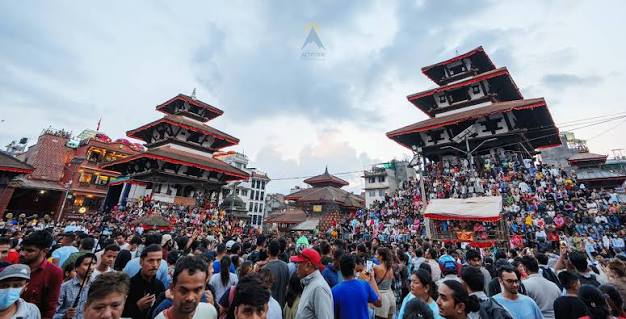
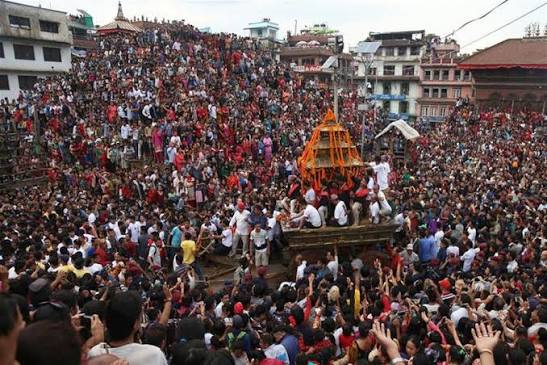
The chariot procession of the Living Goddess Kumari during Indra Jatra in Kathmandu · google
Every year, as the monsoon fades and the autumn full moon rises over the Kathmandu Valley, the old city’s streets fill with drums, incense, masked dancers and thousands of devotees. This is Indra Jatra, one of Nepal’s oldest and most beloved festivals, a celebration where religion, history and community life blend into one spectacular street party.
Known to the Newar community as Yenya Punhi, Indra Jatra honours Indra, the king of the gods and lord of rain, and thanks him for the monsoon that feeds the harvest. It also marks the public appearance of the Kumari, Nepal’s Living Goddess, and pays tribute to the fearsome god Bhairav. Centred on Kathmandu Durbar Square, Basantapur and Indra Chowk, the festival lasts eight days.
The Legend Behind Indra Jatra
The most popular story tells of Indra descending to the earth in disguise. His mother needed parijat flowers for a ritual, and Indra came to the Kathmandu Valley to find them. He was caught picking flowers from a garden and bound as a thief by the local people.
When Indra’s mother came searching for her son, the people realised who they had captured and begged forgiveness. In return for his release, Indra promised that the valley would receive enough dew and rain to ripen its crops. He also promised to guide the souls of those who had died in the past year to heaven. The festival retells this story every year, and families who lost a loved one in the previous twelve months light butter lamps for them.
How the Festival Begins
The opening ritual is the raising of the Indra Dhwaja, a tall wooden ceremonial pole, in front of the old royal palace at Basantapur. Cut from a tree in the forest and carried into the city, the pole stands for the god’s presence and marks the official start of the celebrations.
Near Indra Chowk, a small image of Indra is displayed in a bound posture, recalling the legend of his capture. Nearby, the great mask of Sweta Bhairav, usually hidden behind a wooden lattice, is unveiled for the occasion. During the festival, devotees line up to receive sacred rice beer that flows from the mouth of the mask, an event many people wait for all year.
Lakhe Dance and Masked Performances
Few sights in Nepal are as striking as the Lakhe, a demon-like figure in a shaggy costume and a bright red mask who dances through the streets of Kathmandu. The Lakhe is both feared and loved, a protector who is said to keep evil spirits away from the city. He is accompanied by drummers and followed by crowds of children and onlookers.
Alongside him, performers present sacred dances that tell stories of gods and demons. One famous highlight is the dance of the Pulu Kisi, a masked elephant figure that represents Indra’s divine elephant, Airavata. These performances are not staged for tourists. They are community traditions passed down through generations of Newar families.
Kumari Jatra: The Living Goddess in Procession
The most eagerly awaited part of the festival is Kumari Jatra. On the main days, the Royal Kumari, a young girl worshipped as the living embodiment of the goddess Taleju, is carried through the old city in a richly decorated chariot. She is joined by two other chariots, carrying children who represent Ganesh and Bhairav.
Devotees pull the chariots by rope through the narrow streets, and many believe that receiving a blessing, or tika, from the Kumari brings good fortune for the year ahead. The chariot tradition is traditionally credited to Jaya Prakash Malla, the last Malla king of Kathmandu, who is said to have started it in the eighteenth century.
Indra Jatra and the History of Kathmandu
Indra Jatra is also closely tied to the political history of the valley. According to the historical tradition, Prithvi Narayan Shah took control of Kathmandu in 1768 while the city was celebrating the festival, a moment that is often seen as the turning point in the unification of modern Nepal. Today, the festival still has a ceremonial link to the state, and Nepal’s head of state traditionally receives a blessing from the Kumari during the procession.
Tips for Visiting Indra Jatra
If you plan to attend, keep a few practical points in mind:
Arrive early. The area around Basantapur and Indra Chowk becomes extremely crowded, especially on the main procession days.
Dress modestly and respectfully. This is a living religious festival, not a performance.
Ask before photographing. Photography of the Kumari is not permitted, so follow local guidance.
Check the dates. The festival follows the lunar calendar and falls in the Nepali month of Bhadra or Ashwin, so dates change every year.
Keep your belongings safe. Large crowds can attract pickpockets.
Why Indra Jatra Still Matters
In a rapidly changing Kathmandu, Indra Jatra remains a powerful reminder of the city’s living heritage. It brings neighbours together, honours the dead, thanks the gods for rain and invites the whole city to celebrate in the streets. For visitors, it offers something increasingly rare: a chance to see a centuries-old tradition not as a museum piece, but as a living, breathing part of everyday life.
Whether you are a Kathmandu local, a member of the Newar community or a traveller discovering Nepal for the first time, Indra Jatra is a festival that stays with you long after the drums fade.