Wildlife & Biodiversity
Indian Roofed Turtle: A Jewel of South Asia’s Freshwater Ecosystems
Discover the distinctive freshwater turtle, its remarkable shell, natural habitat and the importance of conserving South Asia’s aquatic biodiversity.
Himal Shahi Thakuri · Oct 27, 2026 · 4 min read
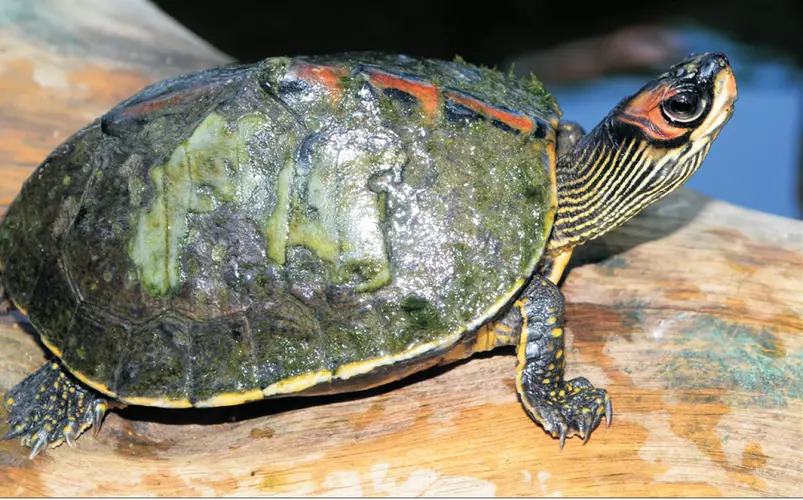
Indian roofed turtle resting near the edge of a freshwater habitat · Google
Indian Roofed Turtle: A Jewel of South Asia’s Freshwater Ecosystems
Across the rivers and wetlands of South Asia, freshwater turtles form an important yet often overlooked part of the natural world. Among them, the Indian roofed turtle stands out for its unusual shell, which features a raised central ridge that gives it a roof-like appearance.
Scientifically known as Pangshura tecta, this freshwater turtle belongs to the family Geoemydidae. Its distinctive appearance and aquatic lifestyle make it an interesting species for wildlife enthusiasts, researchers and anyone curious about the biodiversity of the Indian subcontinent.
A Shell That Sets It Apart
The Indian roofed turtle is named for the characteristic raised ridge along the middle of its shell. This feature gives the carapace a shape that differs from the smoother, more rounded shells of many other turtles.
Its shell commonly displays shades of brown, olive or greenish colouration, while the head may feature contrasting markings. Colour and pattern can vary with age and individual characteristics.
These features help distinguish the species from other freshwater turtles, although accurate identification may require examining several physical characteristics rather than relying on a single marking.
Life in Freshwater Habitats
The Indian roofed turtle inhabits freshwater environments across parts of the Indian subcontinent. Its habitat can include rivers, streams, ponds and other suitable waterways.
Like many aquatic turtles, it depends on access to water for feeding and shelter, as well as suitable places along the banks for nesting. Individuals may be observed basking on exposed surfaces when conditions are favourable.
The availability of clean water, appropriate food and undisturbed nesting areas plays an important role in the species’ survival.
Feeding and Everyday Behaviour
The Indian roofed turtle has a varied diet that may include aquatic plants, algae and small aquatic animals. Its feeding habits reflect the resources available in its environment.
Basking is another notable behaviour among many freshwater turtles. By resting in sunlight, turtles can regulate their body temperature and support normal physiological functions.
Although they may sometimes be seen on logs or riverbanks, these turtles can be difficult to observe consistently in the wild. Disturbance may cause them to retreat quickly into the water.
Reproduction and the Next Generation
Like other turtles, the Indian roofed turtle reproduces by laying eggs. Suitable nesting sites, often associated with sandy or loose soil near water, are important for successful reproduction.
The survival of eggs and hatchlings can be influenced by flooding, habitat disturbance and predators. Changes to natural riverbanks may reduce the availability of suitable nesting areas.
Protecting nesting habitats is therefore an important part of maintaining healthy turtle populations.
Conservation Challenges
Freshwater turtles across South Asia face a range of pressures, including habitat degradation, water pollution, river modification and accidental capture in fishing equipment.
The collection of turtles for illegal trade can also affect some populations. The level of risk varies by species and location, making reliable monitoring and research essential.
Conservation measures can include protecting freshwater habitats, reducing pollution, preventing illegal collection and raising awareness among communities that live near turtle habitats.
The Indian Roofed Turtle and Nepal’s Natural Heritage
Nepal’s rivers, wetlands and ponds support a rich variety of aquatic wildlife. These environments connect forests, grasslands and human communities while providing important resources for many species.
The Indian roofed turtle is associated with parts of the wider Indian subcontinent, but its occurrence in a particular location should be confirmed through reliable distribution records. Species identification is especially important when documenting wildlife in Nepal, where several freshwater turtle species may share similar habitats.
Wildlife photography, scientific surveys and community-based conservation can all help improve understanding of these often-overlooked reptiles.
Protecting Freshwater Ecosystems
The survival of the Indian roofed turtle depends on more than the protection of individual animals. Healthy waterways, natural riverbanks and safe nesting areas are essential to the species’ long-term future.
Reducing pollution, protecting wetlands and promoting responsible fishing practices can benefit turtles and many other aquatic organisms.
Every freshwater habitat preserved today helps protect a wider network of life, from aquatic plants and insects to fish, birds and reptiles.
Conclusion
The Indian roofed turtle, Pangshura tecta, is a distinctive freshwater reptile whose raised shell ridge makes it particularly recognisable. Its life illustrates the close relationship between wildlife and the rivers, ponds and wetlands of South Asia.
By protecting freshwater environments and supporting responsible wildlife research, we can help preserve the remarkable biodiversity that makes the region ecologically valuable.