Wildlife & Nature
Chitwan National Park: Discover Nepal’s Extraordinary Wildlife and Natural Heritage
Himal Shahi Thakuri · Oct 25, 2026 · 14 min read
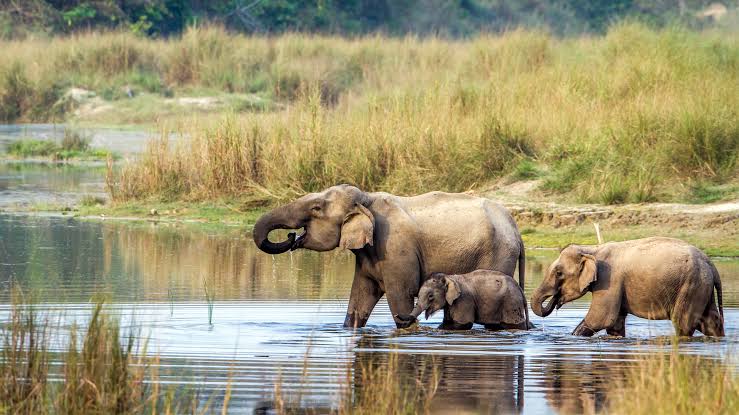
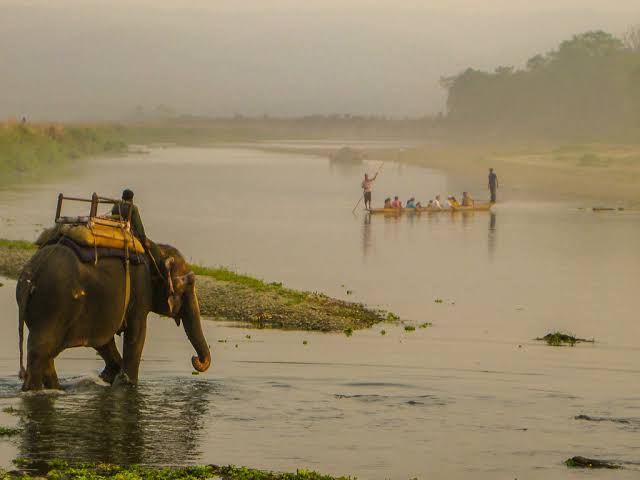
Nepal is internationally recognized for its Himalayan mountains, ancient temples, trekking routes, and distinctive cultural heritage. Yet, beyond the dramatic elevations of the north lies another world, one shaped by subtropical forests, expansive grasslands, fertile river valleys, and an extraordinary diversity of wildlife. In the southern lowlands of the country, Chitwan National Park offers travelers an opportunity to discover this lesser-known dimension of Nepal.
Established in 1973 as Nepal’s first national park, Chitwan National Park covers approximately 952 square kilometres in the Terai region. It was inscribed on the UNESCO World Heritage List in 1984 in recognition of its outstanding natural significance. Its protected landscapes include sal forests, riverine woodland, grasslands, wetlands, and river systems that sustain a remarkable variety of plants and animals.
For international travelers, Chitwan is much more than a destination for wildlife photography. It is a place where conservation, ecology, local livelihoods, and responsible tourism intersect. A journey through the park can reveal the behaviour of wild animals, the importance of healthy ecosystems, and the efforts required to protect threatened species for future generations.
Whether you are planning your first visit to Nepal or returning to explore beyond the Himalayas, Chitwan offers a compelling reason to experience the country’s natural heritage from a different perspective.
Understanding the Landscape of Chitwan National Park
The ecological richness of Chitwan begins with its geography. Situated in the subtropical lowlands, the park experiences seasonal changes that influence vegetation, water levels, wildlife movement, and the overall character of the landscape.
Sal forests form a major part of the park, while riverine forests grow along waterways and support a different range of plants and animals. Tall grasslands provide important feeding and breeding habitats for several large mammals, and wetlands offer shelter and food for aquatic species and birds.
These habitats are closely connected. Rivers transport nutrients and shape the surrounding land, seasonal flooding influences grassland growth, and vegetation provides food and cover for wildlife. Predators, herbivores, birds, insects, and smaller organisms all contribute to the ecological relationships that sustain the park.
For visitors, this diversity means that no two areas necessarily offer the same experience. A journey through open grassland may provide opportunities to observe grazing animals, while a quieter riverbank may reveal waterbirds or crocodilians. Forest trails offer a different atmosphere, where animal calls, tracks, and subtle movements can be more noticeable than the animals themselves.
Understanding these connections makes a visit more meaningful. Rather than seeing Chitwan simply as a collection of wildlife sightings, travelers can begin to appreciate it as a living ecosystem.
The Greater One-Horned Rhinoceros: A Conservation Success Story
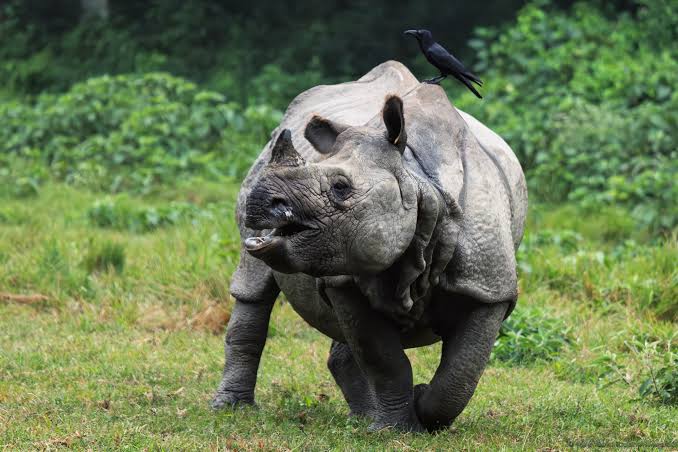
One of the most recognizable animals in Chitwan is the greater one-horned rhinoceros (Rhinoceros unicornis). With its powerful body, thick folded skin, and single horn, this species is among the defining symbols of Nepal’s wildlife heritage.
The rhinoceros has a complex conservation history. Heavy hunting and habitat loss caused populations to decline significantly in the past. The establishment of protected areas, anti-poaching measures, habitat management, and long-term conservation programmes have helped support its recovery in Nepal.
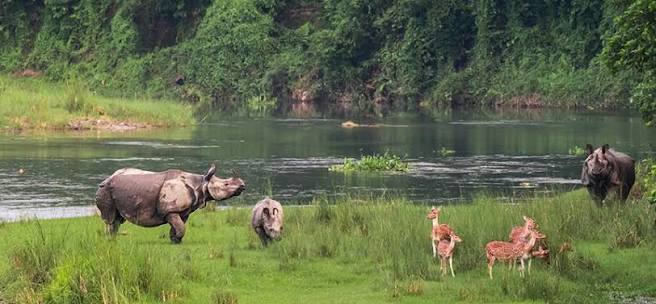
Chitwan is one of the country’s most important strongholds for the species. Its grasslands, wetlands, and surrounding vegetation provide essential feeding and resting habitats.
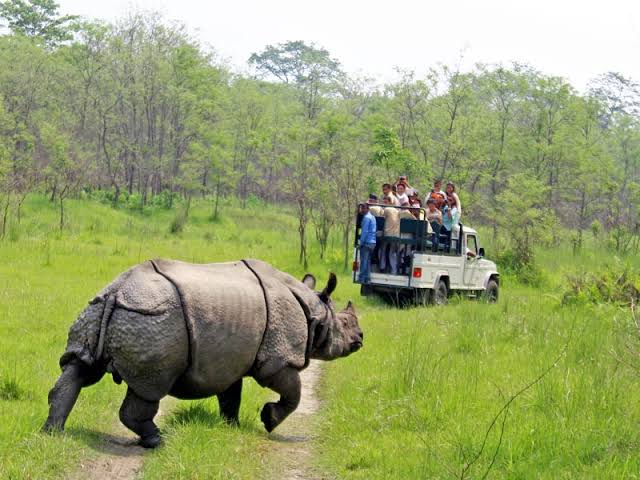
During a guided safari, visitors may encounter a rhinoceros grazing in tall grass, walking through woodland, or resting near a water source. Observing such a large animal in its natural environment can be an extraordinary experience, especially when considered alongside the conservation work that has helped protect it.
However, a wild rhinoceros is not a domesticated animal or a predictable attraction. Its behaviour can change quickly, particularly when it feels threatened. Visitors should maintain an appropriate distance and follow the instructions of authorized guides at all times.
The rhinoceros also represents a wider conservation lesson: protecting a species requires more than preventing hunting. It depends on preserving the habitats, water systems, and ecological conditions that allow populations to survive over the long term.
The Bengal Tiger: The Elusive Predator of the Terai
The Bengal tiger (Panthera tigris tigris) is another important species associated with Chitwan National Park. As one of the largest wild cats in the world, it occupies a significant position within the park’s food web and contributes to the ecological balance of its forest and grassland habitats.
Tigers require suitable cover, sufficient prey, and large areas in which to establish territories. Their presence is therefore connected to the wider health of the ecosystem.
Unlike some of the park’s more frequently observed animals, tigers are naturally elusive. Their striped coats provide effective camouflage, and they often remain concealed within dense vegetation. Even experienced wildlife guides cannot guarantee a sighting.
For visitors, the search itself can provide an opportunity to learn about animal tracks, territorial behaviour, prey species, and the methods used by naturalists to interpret signs of wildlife.
A safari should never be judged solely by whether a tiger appears. Understanding the habitat of a threatened predator and learning about the work required to conserve it can be equally valuable.
Chitwan’s tiger population also illustrates the importance of connected landscapes. Long-term protection depends on maintaining suitable habitat, reducing illegal wildlife trade, monitoring populations, and addressing conflicts between wildlife and people living near protected areas.
Jeep Safaris and Guided Nature Experiences
A guided safari is one of the principal ways visitors explore the wildlife and landscapes of the Chitwan region. Depending on current regulations, park permissions, seasonal conditions, and the location of the activity, visitors may be able to experience designated areas by jeep or join authorized nature walks.
A jeep safari can cover a broader area and offer opportunities to observe grasslands, forest edges, and wildlife habitats. A walking experience, where permitted, can provide a more detailed understanding of smaller ecological features, including tracks, plants, insects, bird calls, and signs of animal activity.
The quality of either experience depends significantly on the guide. A knowledgeable naturalist can explain the significance of different habitats, identify species, and interpret animal behaviour without disturbing the wildlife being observed.
Visitors should choose licensed operators who follow current park regulations and prioritize safety, environmental protection, and animal welfare. Ask about the route, duration, group size, permitted activities, and what happens if weather or park restrictions affect the excursion.
Responsible wildlife tourism recognizes that animals must remain free to behave naturally. Chasing wildlife, feeding animals, or pressuring guides to approach too closely for photographs undermines the purpose of a conservation-based experience.
The most rewarding safari is often one that combines observation with understanding, allowing travelers to appreciate the ecosystem rather than simply searching for a checklist of animals.
Crocodiles, Gharials, and the Importance of Healthy Rivers
The rivers and wetlands of Chitwan are among the most important components of its natural environment. They support aquatic life, provide water for terrestrial animals, and create habitats for numerous species of birds, reptiles, fish, and invertebrates.
Two particularly notable reptiles are the mugger crocodile (Crocodylus palustris) and the gharial (Gavialis gangeticus).
Mugger crocodiles have broad snouts and occupy various freshwater habitats. They may sometimes be observed resting along riverbanks or basking in the sun. Gharials have exceptionally long, narrow snouts adapted primarily for catching fish. The gharial is classified as Critically Endangered, and its survival is closely connected to the protection of suitable river habitats and nesting areas.
These species highlight the importance of freshwater conservation. Changes in river flow, pollution, fishing practices, sand extraction, and disturbance to nesting banks can affect the delicate conditions on which aquatic wildlife depends.
For visitors, observing crocodilians from an appropriate distance can provide a fascinating insight into the natural history of the region. It is important never to approach, feed, or attempt to attract these reptiles.
The health of Chitwan’s rivers matters far beyond the animals living within them. Freshwater ecosystems also support surrounding communities, making their conservation an important environmental and social priority.
Birdwatching in Chitwan: A World Beyond Large Mammals
Although large mammals often receive the most attention, Chitwan is also an important destination for birdwatching. Its combination of forests, open grasslands, wetlands, and river corridors creates a wide range of habitats for resident and migratory species.
Depending on the season and location, visitors may encounter kingfishers, hornbills, eagles, storks, herons, egrets, and many other birds. Each habitat offers different opportunities, from watching waterbirds along riverbanks to observing forest species moving through the canopy.
Early mornings can be particularly rewarding. As the landscape becomes brighter, bird calls emerge from the forest, and many species become active in search of food.
Birdwatching also encourages travelers to slow down. Rather than covering large distances in search of a major sighting, visitors learn to recognize calls, notice movements among branches, and observe the relationships between birds and their environment.
A local bird guide can help identify species and explain their behaviour, seasonal movements, and ecological roles. Binoculars and a field guide can further improve the experience.
For photographers, naturalists, and travelers who appreciate quieter outdoor activities, birdwatching offers a rewarding way to experience Chitwan’s biodiversity.
Tharu Culture and the Living Heritage of the Terai
The cultural identity of the Chitwan region is closely connected to its landscape and the communities that have lived in the Terai for generations.
The Tharu are an Indigenous people of Nepal’s Terai, with diverse languages, traditions, food, architecture, agricultural practices, and cultural expressions. Their heritage forms an important part of the social history of the region.
Depending on the community and experience offered, visitors may learn about traditional houses, farming practices, local ingredients, handicrafts, music, dance, and festivals. Community-led visits can provide a valuable opportunity to understand everyday life beyond the national park.
These experiences should be approached with cultural respect. The Tharu are not simply a tourist attraction or a historical subject; they are diverse communities whose traditions continue to evolve in the present.
Travelers can support responsible cultural tourism by choosing experiences led by local people, asking permission before photographing individuals, respecting community customs, and purchasing locally made products where appropriate.
Combining wildlife exploration with a cultural visit can provide a broader understanding of Chitwan. It reveals that the region’s identity is shaped not only by its natural environment but also by the people, histories, and livelihoods connected to it.
Conservation Challenges and the Future of Chitwan
Chitwan National Park is widely recognized for its conservation importance, but protecting a complex ecosystem requires continuous effort.
Habitat change, illegal wildlife trade, invasive species, environmental pressures, and human-wildlife conflict can affect animals and the people living around protected areas. Rivers and grasslands also depend on ecological processes that may be influenced by land use, infrastructure, and changing environmental conditions.
When wild animals move beyond protected boundaries, they can damage crops or threaten livestock, creating difficult situations for nearby communities. Effective conservation must therefore consider human safety, local livelihoods, and the long-term needs of wildlife together.
Park authorities, conservation organizations, researchers, and local communities all have important roles in addressing these challenges. Monitoring wildlife populations, protecting habitats, maintaining ecological connectivity, and developing practical responses to human-wildlife conflict are essential parts of long-term conservation.
Tourism can contribute when it supports legitimate local employment, encourages environmental awareness, and operates within appropriate regulations. However, tourism alone cannot solve every conservation challenge.
Visitors can make a positive contribution through simple decisions: selecting responsible operators, respecting park rules, reducing waste, and supporting businesses that treat wildlife and local communities with care.
The Best Time to Visit Chitwan National Park
Chitwan can be visited during much of the year, but the experience varies with seasonal weather, vegetation, and access conditions.
Autumn, from September to November: The monsoon generally begins to recede, and conditions can become more comfortable for outdoor activities. Rainfall and local access conditions may still vary.
Winter, from December to February: Cooler mornings and occasional mist can influence early excursions. Daytime conditions are often more comfortable, although visitors should prepare for changes in temperature.
Spring, from March to May: Temperatures rise, and parts of the landscape may become drier. Early-morning activities can be more comfortable than those scheduled during the hottest hours.
Monsoon, from June to September: Heavy rainfall, humidity, flooding, and changing road conditions can affect access and outdoor activities. Some excursions may be restricted or unavailable.
These are general seasonal patterns rather than guarantees of wildlife visibility. The most suitable period depends on individual interests, local conditions, and the activities permitted at the time of travel.
Before booking, check weather forecasts, current park access, and guidance from authorized local operators.
How Many Days Should You Spend in Chitwan?
For many international visitors, two to three days provides a reasonable introduction to Chitwan and its surrounding communities.
A short stay can include a guided safari, birdwatching, and a cultural experience. Travelers with more time may be able to explore additional habitats, learn about conservation, and enjoy the region at a less hurried pace.
A longer stay does not guarantee more wildlife sightings, but it can create opportunities to appreciate the landscape from different perspectives. It also allows time for rest between outdoor activities, which can be valuable during warmer months.
The ideal itinerary depends on your interests, budget, travel schedule, and preferred style of accommodation. Visitors should confirm which activities are currently permitted and allow flexibility for weather and park regulations.
Where to Stay When Visiting Chitwan
The Chitwan region offers a variety of accommodation options, from simple guesthouses and locally operated homestays to comfortable lodges and nature-focused retreats.
The right choice depends on the kind of trip you want. Some travelers prioritize convenient access to safari departures, while others prefer a quieter setting, opportunities to learn about local culture, or accommodation that emphasizes environmental responsibility.
When comparing properties, consider location, transport arrangements, meals, guiding services, accessibility, and the transparency of any wildlife activities included in a package.
Ask accommodation providers how they support local employment and whether their wildlife experiences follow current regulations and responsible animal-welfare practices.
Staying in the region also gives visitors an opportunity to experience Chitwan beyond the hours spent on safari. Local food, village surroundings, river landscapes, and conversations with knowledgeable guides can all contribute to a richer understanding of the destination.
Practical Advice for International Travelers
A little preparation can make a visit more comfortable and help prevent avoidable problems.
* Clothing: Choose lightweight, breathable clothing suitable for the season. Neutral colours can be practical for wildlife observation. * Footwear: Bring comfortable walking shoes appropriate for the activities you have booked. * Sun protection: Carry sunscreen, a hat, and drinking water, particularly during warmer months. * Insect protection: Use suitable insect repellent and follow local health guidance. * Photography: A camera with a useful zoom lens or a pair of binoculars can help you observe wildlife without approaching too closely. * Safety: Follow the instructions of authorized guides, remain in permitted areas, and never approach wild animals independently. * Booking: Confirm accommodation, transport, activity availability, and any required permits in advance, particularly during busy travel periods.
Travelers should also check current entry requirements for Nepal, insurance coverage, and any relevant health recommendations before departure.
Why Chitwan Deserves a Place on Your Nepal Itinerary
Chitwan National Park offers a perspective on Nepal that is distinct from the country’s mountain destinations. Its forests, grasslands, rivers, and wetlands support an extraordinary variety of life, while its conservation history demonstrates the importance of protecting threatened species and the habitats they depend on.
A visit may bring an encounter with a greater one-horned rhinoceros, an observation of birds along a river, or an introduction to the cultural heritage of the Terai. Each experience reveals a different part of the region’s identity.
The value of Chitwan, however, extends beyond what a traveler sees during a single excursion. It lies in understanding the relationships between wildlife, ecosystems, conservation, and local communities.
For visitors seeking a more complete picture of Nepal, Chitwan deserves consideration alongside the Himalayas, historic cities, and cultural landmarks. It reminds us that the country’s natural heritage is not confined to its highest mountains; it is equally present in the forests and lowlands that sustain an extraordinary diversity of life.
The most meaningful journey is one that leaves travelers with more than photographs. It leaves them with a deeper appreciation of Nepal’s natural world and the shared responsibility to protect it.